Blog
How Commercial Electrical Consultants Improve Workplace Safety
Related Articles





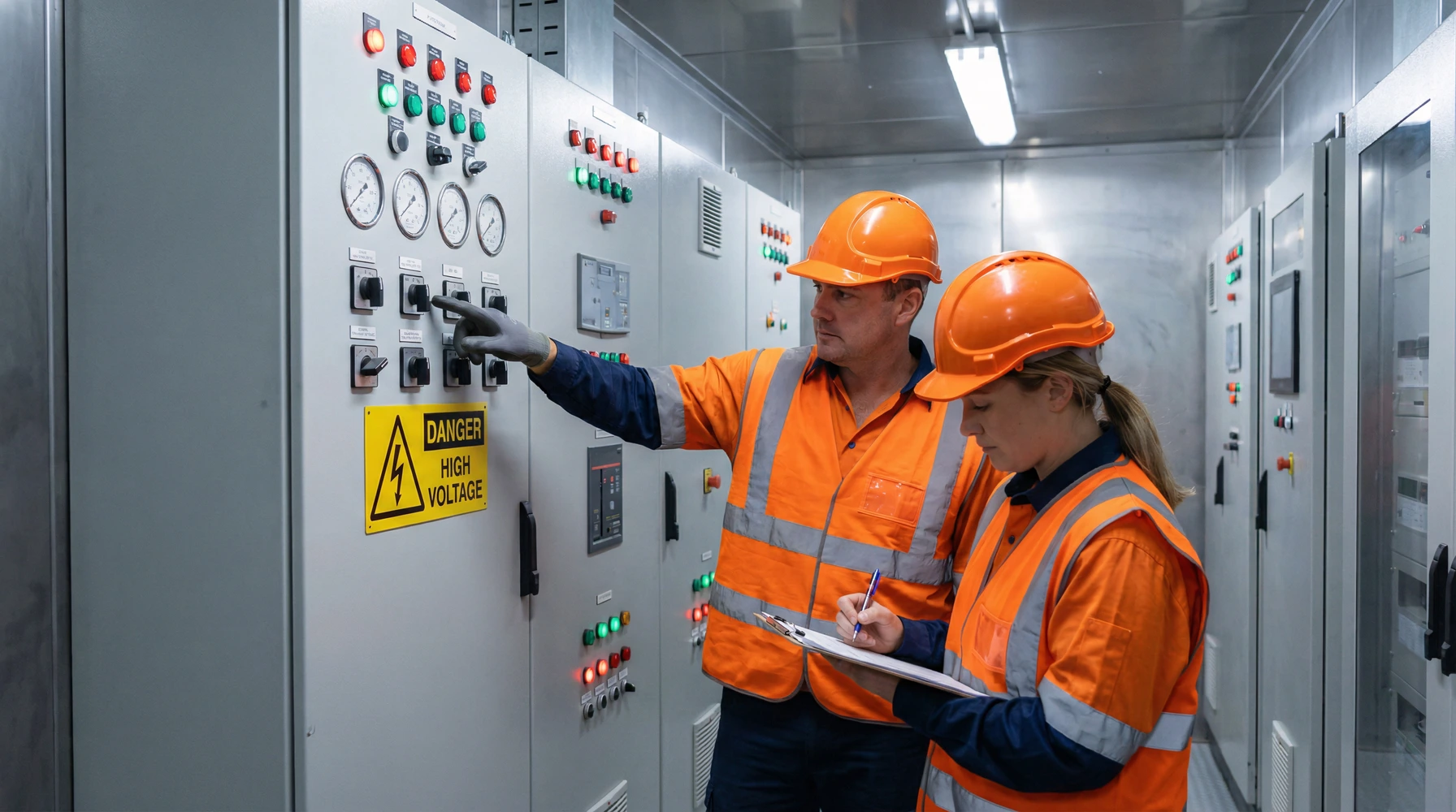
Workplace safety rarely gets a mention in the boardroom until something actively goes bang. A tiny, ignored electrical fault can instantly spiral into fried machinery, dead trading hours, brutal repair bills, or a severe staff injury.
Right across Brisbane, smart operators are investing heavily in safer workspaces, not just to tick a government compliance box, but to safeguard their staff, clients, and bottom-line assets.
That’s where specialised commercial electrical consultants come into the picture. Instead of just playing whack-a-mole with blown fuses, these pros audit your entire grid, expose hidden hazards, optimise your capacity planning, and keep your doors open safely. Their scope covers everything from new commercial developments and office fit-outs to heavy industrial plants and busy retail hubs.
As electrical systems become more complex, businesses increasingly rely on expert guidance to reduce hazards before they become expensive problems. Understanding how commercial electrical consultants contribute to workplace safety helps organisations make smarter decisions and build safer workplaces for the future.
A surprising number of workplace hazards are not dramatic. They are small defects, overlooked upgrades, undocumented modifications, and assumptions that have quietly accumulated over the years.
During site inspections, commercial electrical consultants regularly find distribution boards carrying loads they were never designed to handle because equipment was added gradually over time. Nobody noticed a problem because nothing had failed yet.
The reason commercial electrical consultants frequently identify these issues is simple. Their perspective is different from that of contractors focused on installation work or facility managers juggling dozens of operational responsibilities. A consultant is often looking at patterns rather than isolated components. An overloaded circuit may not appear dangerous on its own, but combined with poor ventilation, ageing cabling, and increased equipment demand, the picture changes considerably.
There’s a blunt operational reality that most business owners completely miss: power grids rarely drop dead all at once. Faults crawl in slowly. Terminals cook over months, connections vibrate loose, and old switchgear degrades.
Staff normalises the glitches, working around flickering panels or dead sockets just to get through the shift. By the time a major short hits, the red flags look obvious in hindsight, but they were buried deep under daily chaos where no one had the trade expertise to spot them.
Walk into any Brisbane commercial site, and you’ll see the same battle: infrastructure maintenance budgets constantly losing out to shiny growth projects. Buying new machinery, shop renovations, or customer-facing upgrades always gets the cash injection over auditing your main board. That’s why electrical consultants are almost always called in after a system starts failing or smoking.
In a fast-paced logistics warehouse, delaying a basic electrical audit triggers a brutal chain reaction. A single cooked circuit breaker shuts down your main conveyor sorting line, which cripples your fulfilment schedule.
Next thing you know, delivery delays spark a wave of customer complaints. Management sprints around trying to fix the logistics mess, leaving the underlying, dangerous wiring completely untouched. This is exactly why we push for proactive risk reviews over reactive firefighting.
Look at the actual numbers. Most businesses evaluate any upgrade solely on the upfront trade quote. They completely forget to factor in the catastrophic cost of midnight emergency callouts, dead production lines, ruined hardware, messy insurance audits, and dark trading hours. A basic baseline assessment by commercial electrical consultants catches these issues before they turn into five-figure disasters. The catch? Prevention doesn’t get a standing ovation, but a major grid failure shows up on your P&L instantly.
True catastrophic electrical failures or explosions don’t happen out of nowhere. The trail always starts months or years earlier. When commercial electrical consultants handle post-incident forensics, they invariably track the disaster back to a long line of tiny, lazy shortcuts and budget compromises that slowly stacked up until the system reached its breaking point.
A common example involves temporary solutions becoming permanent fixtures. Extension leads remain in place indefinitely. Portable equipment is connected to circuits that were never intended to support continuous operation. Modifications are performed during urgent operational periods with limited documentation. In many cases, nobody intended to create a hazard. The risk emerged gradually through convenience and time pressure. That is where commercial electrical consultants provide value by identifying operational habits that introduce exposure.
Every day, familiarity breeds dangerous complacency. Floor staff working next to electrical panels become completely desensitised to warning signs. A weirdly buzzing distribution board, random voltage sags, or tools that trip occasionally just become part of the background noise of the shift, which is why experienced commercial electrical consultants are needed to objectively audit the environment and uncover the subtle, overlooked risks before they compromise workplace safety.
One of the most valuable services provided by commercial electrical consultants is the electrical risk assessment.
Electrical hazards are not always obvious. Problems may exist behind walls, above ceilings, or inside ageing infrastructure without any visible warning signs.
A professional assessment examines the following:
The goal is simple: identify potential risks before they create safety incidents.
Many discussions about workplace safety focus on existing buildings, but some of the most significant safety outcomes are determined long before a facility becomes operational. During planning stages, commercial electrical consultants influence decisions that shape how safely a workplace functions for years afterwards.
The electrical infrastructure is always the first target for value engineering when project managers try to slash build costs. There’s nothing wrong with smart cost management, but butchering your power design destroys the operational flexibility your business will scream for later. Experienced consultants speak up when designs leave zero spare board capacity, because your business will scale way faster than the original blueprint anticipated.
There is also a practical trade-off between immediate savings and long-term operational resilience. Larger switchboards, spare capacity, better cable management pathways, and improved access arrangements may appear excessive during construction. Five years later, those same features—often recommended by proactive commercial electrical consultants—can dramatically simplify upgrades while reducing safety risks.
| Potential Issue | Financial Impact |
| Equipment damage | High repair costs |
| Workplace injuries | Compensation expenses |
| Compliance breaches | Regulatory penalties |
| Downtime | Lost productivity |
| Fire damage | Major property losses |
| Reputation damage | Lost business opportunities |
While injury prevention is always the primary driver, an electrical system failure hits way more than just your safety metrics. A sudden commercial power-supply blowout ripples through your entire supply chain, ruining client relationships, killing team morale, breaching supply contracts, and instantly vaporising your daily profit margins, proving that the oversight of qualified commercial electrical consultants is vital for safeguarding your bottom line.
Corporate offices face a different kind of pain. A power dropout lasting even five minutes can corrupt local servers, drop phone systems, freeze digital access control, and disconnect remote workers. The instant financial hit might look small, but the cumulative productivity drain is brutal.
Modern business relies entirely on stable, clean juice, meaning safety and uptime are now directly tied together, a reality that drives leading enterprises to engage commercial electrical consultants to protect their infrastructure regularly.
Few organisations have unlimited budgets. Every recommendation competes against other priorities. This reality creates tension between ideal solutions and financially realistic outcomes. The challenge is not simply deciding whether improvements are worthwhile.
The challenge is deciding which improvements should happen first, which is exactly where the strategic prioritisation of commercial electrical consultants helps align essential risk mitigation with your actual capital constraints.
Some critical fixes give you a massive safety return for a few hundred bucks. Others require major capital sign-offs and weeks of planned downtime. Making the right call means partnering with commercial electrical consultants to understand your actual electrical risks in the workplace, production impact, and long-term scaling plans—not just staring blankly at the initial upfront quote.
It’s a mistake to look at infrastructure jobs in isolation. A main switchboard upgrade looks incredibly expensive on a single quote—until you stack it up against your recurring repair bills, blackout risks, and bleeding energy efficiency. When you run the numbers across the entire lifecycle, the math flips, which is why commercial electrical consultants focus on long-term value: safety upgrades directly protect your productivity, insurance premiums, and machinery lifespan.
The increasing availability of monitoring systems has changed how electrical risks are identified. Modern facilities can track power quality, load patterns, equipment performance, and environmental conditions with far greater visibility than was possible years ago, making the data-driven insights of commercial electrical consultants more critical than ever to turn that raw data into actionable risk-mitigation strategies.
That said, technology is not a magic solution. Data without interpretation can become another source of confusion. Many facilities collect enormous amounts of information yet struggle to determine which findings actually require action. Monitoring systems support decision-making, but they do not replace practical assessment and experience.
One interesting trend involves organisations becoming more proactive because they now see warning signs developing in real time. Instead of waiting for equipment failure, they can schedule maintenance around operational requirements. This shift reduces disruption and often lowers costs, providing a massive advantage that commercial electrical consultants leverage to help businesses transition from reactive firefighting to strategic, predictive asset management.
Proactive commercial electrical safety is a vital business asset that protects your bottom line, equipment lifespan, and workforce well-being. By moving beyond basic regulatory compliance and partnering with specialised consultants, you prevent hidden hazards from escalating into costly disasters.
Investing in comprehensive risk assessments, optimised power infrastructure design, and an alert, site-safety culture eliminates operational friction and safeguards production uptime. To protect your commercial assets and build a safer workplace, contact us today for an expert consultation.